
An obligatory I’m-going-to-ISTE post.

Yes, I’m going to ISTE. I’m not a “newbie” due to a technicality-  I did spend some time at NECC in Hotlanta in 2007. My husband’s district sent a few representatives to the conference, so I tagged along to make a vacation out of it and to take in a few baseball games at Turner Field. (We’re keeping an eye on you, you goofy Phillies, and are never too far behind….)

When I reflect upon first impressions of NECC 2007, thoughts such as “Wow, there are a lot of vendors here,” “What good are any of these vendors to me? I don’t make purchasing decisions as an elementary tech teacher,” “What do all of these people DO here all week?” “I wonder if that vendor is giving away free stuff?” and “Wow, there sure are a lot of vendors here,” entered my brain. It seemed like a giant, shinier “tent sale” planned to hype up products to a bunch of tech-geek dweebies and educators who didn’t want to give it a rest over the summer months. I figured it was an event I would be fine never again visiting in my lifetime.

Fast forward a few years, and I think I may have missed the boat. Back then, I wasn’t involved in any sort of learning network. I was a teacher who worked on her own, who only occasionally and informally collaborated with colleagues. I did what I needed to do, when I needed to do it. I enjoyed my work, but I was complacent. I believe this year’s ISTE will be a different experience for me. Here are some reasons why, and the things I am most looking forward to over the next few days.

Principals sure do love yapping! I am really humbled to be included in the Connected Principals panel that Scott McLeod is facilitating on Monday. 2:30 PM.  “What does it mean to be a tech-savvy principal?” is sure to spring a lot of interesting conversations around teaching, learning, tech, and the role of the principal in embracing and promoting the shifts in education. Each one of my fellow panelists is a) awesome b) willing to share anything and everything about what they’re doing in their schools and c) has varied experiences and expertise which will allow for well-rounded and informative conversations from which everyone in attendance will surely benefit. Don’t miss it!

How will this help my kids? Yes, there will be vendors and many companies sharing about their products at ISTE. This year, however, I have more of a background in working with these products and services, and the lens through which I will be viewing every booth, every display, every smiling logod-polo-shirted-representative, is, “How will this help my students/teachers? How is this of use to my school, my students, my learning community?” And I won’t limit this guiding question to my trips through the exhibition and vendor halls. The daunting task of choosing which sessions to attend resulted in a three-page “ISTE planner” printout… many of the time slots are double- and triple-booked, and if I don’t feel like a session’s content is adding to my learning or would be beneficial for my learning organization, I’m going to attempt to find the courage to walk out. The advice others have shared about simply finding people to connect with in the hallways or the social lounges is sure to be a rich experience, sessions or no sessions.

Watch out for the wallflowers 🙂 I try to be social in my interactions on Twitter and in online communities, and I think I do a pretty decent job of that, but I definitely don’t excel at interpersonal relationships when I first meet people in face-to-face settings. I can be shy at the outset and have a difficult time introducing myself to people. I’m pretty convinced no one really wants to meet or hang out with me, so if you see me, please say hello (if you care to)! I truly do look forward to meeting so many of the amazing members of my network that add to my learning each and every day. I know it will be overwhelming, but worth it!

In summary, what I believe will be most valuable about attending ISTE (or any conference/edcamp/ntcamp/Educon for that matter) are the opportunities to share about what works/what doesn’t work in your schools and classrooms; personalized learning (don’t be afraid to take the reins); and the chance to meet and interact with people who are passionate about the work they do in the field of education. I’m anxious to see if ISTE11 lives up to these expectations and am looking forward to sharing what I’ve learned. If it fails to impress, then it’s not the type of conference for me, which doesn’t make it any less valuable or important to others.

That’s the beauty of learning – when you own it.

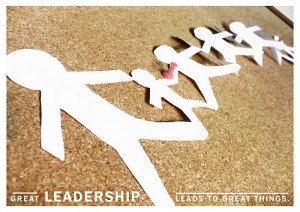
Leading the charge.

In many school districts, when summer arrives, administrative teams come together for the annual “admin retreat.” When I first heard this term, I envisioned principals and central office personnel packing up their camping gear, overdosing on bug repellant, and venturing into the Pennsylvania woods somewhere to discuss the trials and tribulations of the role of the administrator. For the past two years, my experience with the admin retreat has consisted mainly of day-long meetings (drowning in data) held in overly air-conditioned rooms (how can I concentrate on all of this delectable data if my body temperature is 92 degrees?) at a local conference center or golf course banquet hall (greens fees not included).

Not so this year.

Kudos to my superintendent for exploring alternative options for our retreat this year, as we spent the day immersed in stories of leadership through the lens of the American Civil War, on the battlefields of Gettysburg. Battlefield Leadership, led by former school administrator Dr. Michael McGough, was highly engaging, personally relevant, and one of the most meaningful days our administrative team has spent together.

Interwoven through his detail-rich tales highlighting the people, places, and events that comprised the battle of Gettysburg, Mike used examples of Civil War leaders’ thought processes, strategies, and character traits to shape our understanding of various leadership styles and provide us with essential principles for educational leaders. He often referenced Jim Collins’ Good to Great, John C. Maxwell’s The 21 Irrefutable Laws of Leadership, as well as wisdom shared by Lee Iacocca in Where Have All the Leaders Gone?

I’d like to share with you several of the leadership principles and ideas we discussed yesterday.

  • “A leader without followers is just a person taking a walk.”
  • A leader understands her role in the organization.
  • A leader doesn’t allow his followers to forge ahead without first surveying the lay of the land. He leads from the front, but he always gauges where his team is, and knows how he will adjust if necessary.
  • Great leaders always have a plan B. And a plan C. A great leader is always focusing on his next move in checkers, not the move he’s about to make.
  • True leaders breed other leaders.
  • Powerful leaders know the people they’re leading. Build relationships.
  • “The absence of leadership is chaos.”
  • The people you’re leading should always know exactly what you’re asking them to do. When there are communication lapses, it causes frustration for both the leader and his followers.
  • Leaders understand that they are part of the emotional framework of the organization. They lead with civility and compassion.
  • Always be willing to adjust long-term goals based on short term successes and strategies.
  • What one thing made Lincoln such a powerful leader? Unwavering vision. (Did Lee lack this quality?)
  • A leader knows the difference between winning and not losing.
  • A great leader concerns herself with the critical mass. She does not base her effectiveness on the accolades of the two people who think she walks on water, nor the two people who criticize her every move.
  • Ego-driven leaders are not true leaders.
  • You’ll never hear the bullet that hits you.
  • Leaders effectively and eloquently react to unexpected circumstances.
  • Leaders are directly responsible for some successes, and others are delivered to them by successful team members. Know the difference. Recognize and celebrate the team members who bring the organization success.
  • It is essential for a leader’s followers to respect the leader and what he does. It is not essential for a leader to be well-liked by everyone in the organization.
  • Leaders know when to admit defeat and take responsibility for it.
  • Leaders have the desire to express a lot of things… but true leaders know what’s appropriate to express and how to do so.
  • Leadership is time, place, and situation sensitive. Leadership can be studied, refined, and augmented to meet any condition.
  • When issuing directives, make it clear whether you want the task completed effectively or efficiently. Dedication to one may be at the cost of the other.
  • A great leader knows where a person best fits within the organization. He delicately and personally evaluates each person’s performance and moves them to another role if necessary for the good of the organization.
  • Leaders make sure to differentiate between fact and opinion when someone else delivers information to their door.
  • It’s not degree or pedigree… true leaders are born of hard work. True leaders are tired at the end of the day.
  • Leaders understand the power of words and know how to use them.

We were asked to consider each thought in the context of our role(s) within the learning organization, and I encourage you to do the same. At the start of our day, we were given green and yellow index cards. Our task was to consider our goal-setting, our strategies, our actions, and jot down things we wished to stop doing on the yellow cards, since these things were not contributing to or aligning with our ultimate visions. On the green cards, we were to document ideas for how we might improve in an area or do things differently. At the conclusion of the day, we sealed the cards in separate, self-addressed envelopes, which we will receive anytime over the course of the next six months. These short messages will serve as reminders of our day together and all that we have learned.

If you would like to inquire about this learning experience and how it can serve your organization, Mike can be reached at drmike3@comcast.net. Many thanks to Mike and my administrative colleagues for a day immersed in history, learning, and camaraderie.

Principal 2.0


CC licensed image shared by Flickr user davidr

This piece was originally posted on Powerful Learning Practice’s Voices from the Learning Revolution blog. Visit Voices and be inspired!

“The principalship is the kind of job where you’re expected to be all things to all people.” (Fullan, 2001)

“Wanted: A miracle worker who can do more with less, pacify rival groups, endure chronic second-guessing, tolerate low levels of support, process large volumes of paper and work double shifts (75 nights a year). He or she will have carte blanche to innovate, but cannot spend much money, replace any personnel, or upset any constituency.” (Evans, 1995)

“At the present time the principalship is not worth it, and therein lies the solution. If effective principals energize teachers in complex times, what is going to energize principals?” (Fullan, 2001)

Not worth it. That is a pretty significant phrase, but one that I don’t believe most administrators find true. I would like to instead address Fullan’s question, “What is going to energize principals?” One possible answer? Connected learning.

I experienced some feelings of isolation my first year in the classroom, as my assignment was in a small, rural school where I was the only sixth grade teacher. The feeling of not having readily available help that first year pales in comparison to the isolation I felt in my first year of the principalship. Add to that the increasing demands Fullan describes, and the rate at which administrators are expected to lead change, and the complexity of our role increases hundredfold.

An administrator has the option of seeking guidance from a principal colleague or central office administrator, although there are times when doing so could cause the principal to feel fearful that she is exposing a weakness or lack of judgment. She instead turns inward for solutions, for explanations, until the isolation compounds and the day-to-day management tasks overwhelm the true leadership that should be prominent in her work.

As administrators, we expect our teachers to collaborate, cooperate, and continue to learn. We ask the same of our students. Why should we hold ourselves to a different, even lesser, standard? I believe assuming the role of lead learner in our school community is one of the most imperative roles we can play.

Harnessing the power of social media

We live in a time where the tools and technologies we are afforded have flattened our world. Principals and school leaders now have a vast array of options for learning and connecting with others. I have experienced the very real benefits of time invested in developing my own personal learning network, utilizing the Web and social media tools.

By harnessing the power of social media, principals can take advantage of improved organizational efficiency, solidify and broaden communications, serve as lead learner, and develop relationships that will ultimately build an organization’s capacity and benefit children. Our students will be expected to enter adulthood as critical thinkers, problem solvers, and collaborative, productive team members. We must model the power of digitally enhanced learning for them, for our teachers, and for the community.

We must connect. If you’re capable of connecting and learning from those in your physical realm, consider the power of building relationships with other inspiring educators from around the world. Too often we think: how could that person’s experiences help me when their schools and circumstances differ so greatly from mine? That’s precisely the reason we can learn so much from one another. I have as much to learn from a high school principal in an urban school setting as I do from an elementary principal in a neighboring district. The varied perspectives are invaluable.

So, where can an administrator find these connections? For me and many others, Twitter has been the main vehicle through which we’ve built a network of professional learners. This article can help you get started, and I personally am willing to help any interested administrator embark on this journey! The blog Connected Principals was essentially born out of the relationships built around conversations on Twitter. George Couros, recognizing the valuable contributions stemming from our online discussions, decided to create a common space for administrative bloggers, to bring us together and unite our voices under a shared purpose. I know that if I ever need advice, ideas for projects or resources, or just someone willing to let me vent, I can go to any of my Connected Principals colleagues who will be there for me with a supportive, critical voice.

We must share. As a starting point, consider the simple benefits of using shared, digital spaces such aswikis to organize and exchange information with staff. Respect your teachers’ time by only holding a faculty meeting when there is an agenda item worth true discussion. Empower your teachers to be wiki contributors so they can add information of their own. Stop the insanity of searching aimlessly through email inboxes to try to find that tidbit of information someone mass-emailed two weeks ago! Do you and others often locate great resources to share? Use Diigo or a similar social bookmarking site to share and even annotate those resources in a streamlined, organized manner. Collaborate on projects usingGoogle Docs. No longer do precious minutes have to be wasted in meetings if project authors can work in a common digital space and contribute at times that best suit them.

We must build community. Communications with families and community members are vital to the success of any school and can be powered up through the use of social media. Consider the advantages of writing about school successes in a public blog or Facebook page regularly, highlighting the wonderful accomplishments of students and staff. Social media affords principals the opportunity to develop forums where community voices can be heard and valued. The benefits of managing public relations before outside sources distort the facts are innumerable, and the platforms through which these communications can occur are, for the most part, free to use!

We must be transparent. Are you transparent in your learning? Would you like to be? What does transparency entail? For one, allow your teachers and students to see that you value your own learning. Have you ever discussed with a teacher how a book or article you’ve read could impact classroom practice? If so, you’re comfortable with sharing your learning in a local forum, so consider branching out to share your ideas with other interested parties. Blogging is a great first step to becoming a producer, not just a consumer, of information. Simply take the thoughts you’d normally converse about and compose a post! Posterous, WordPress, and Blogger are all user-friendly platforms and ideal for the beginning blogger.

Keep in mind that there are no right or wrong ways to express one’s feelings and share knowledge. New bloggers often ponder, “Who really wants to read what I have to say?” “What if someone doesn’t agree with what I write?” Begin blogging as a personal form of reflection, to help you examine your decision-making processes and actions as principal. Read other educators’ blogs. Subscribe to RSS feeds and organize the flow of new ideas with Google Reader. Comment and include links to your own writing to develop a readership. Get to know the other educators you’re connecting with. Learn about their philosophies, and let the shared wisdom you discover help guide your work.

Principals leading the way

The role of the principal is definitely worth it. It’s a role that should, first and foremost, be about sharing, building relationships and community, and connecting for learning. Principals need to ensure they are modeling and building capacity in the most efficient and meaningful ways possible. We need to embrace, not ignore, the tools we now have available to build powerful learning communities. We are faced with a compelling need for change, and we owe it to our children to lead the way in bringing connected, enhanced, and authentic learning opportunities to our schools, communities, and world.

Evans, C. (1995) ‘Leaders wanted’, Education Week.
Fullan, M. (2001). The new meaning of educational change. Teachers College Press.


Time for #NTcamp!

At some point this evening I will arrive in fabulous Burlington High School country for #NTcamp Burlington, which will be held at Burlington High School, home of Patrick Larkin and the Red Devils. 🙂  Only Mother Nature and Southwest Airlines know exactly when I will arrive, but when I do, I know a lot of great connecting and learning experiences await! Why? Because NTcamp…

…uses the unconference model to promote engaging, participatory driven professional development for teachers, librarians, administrators, technology specialists, and college students. NTCamp is not only for new teachers, but also for anyone in the education field looking for a variety of professional development packed into one day. While the focus remains on professional development for new teachers, those who have had years of teaching experience will not get bored.  

Check out the NTcamp blog to read about the day’s events, view the schedule, and find out how you can participate virtually through the LiveStream sessions and interactive Twitter feeds. To learn more about the origins of the “unconference,” read Patrick’s great post and thank Dan Callahan and MaryBeth Hertz the next time you see (or tweet) them!

To kick off the day, I’ll be participating in the Connected Principals panel with Patrick Larkin, Larry Fliegelman, and Eric Juli. I’m really looking forward to this experience and encourage you to take part by submitting questions for the panel! Use the hashtag #ntcamp to follow along with the happenings tomorrow. Thanks to Andrew Marcinek and the rest of the organizers for working so hard to make this day of learning come together!

An #edcamp experience

5232619436_e29c688501_o_400x266.shkl
Photo by SpecialKRB via Flickr

Yesterday I attended my first “unconference,” Edcamp NYC, held at The School at Columbia in fabulous New York City, which was definitely a day of learning that warrants reflection.

The session board filled up quickly upon arrival, and I’m thankful that everyone took the time to share their expertise and talents with others. That’s what this day of learning is all about.

I had the pleasure of meeting and learning from Lauren Goldberg, whose involvement with the Peers Forum for Excellence in Teaching has shaped her experiences with best practices in teaching and learning. Along with Kevin Jarrett and David Ginsburg, we discussed the current emphasis on covering curriculum and how we can shift to a curriculum design that focuses on “the big ideas,” spanning content areas and centering on student learning. I enjoyed hearing from an elementary math instructor at The School at Columbia who detailed their assessment practices: 1:1 interviews with students, portfolios with authentic student work samples, and plenty of anecdotal notes on student progress. There are two teachers in each classroom, so while one teacher leads instruction, the other transcribes the lesson, which is saved to Google docs. When it comes time to report on student progress, the transcripts of learning can be accessed by any teacher, who can draw upon students’ actual learning experiences to shape their report. Amazing!  I absolutely loved hearing about Lauren’s experience with a school-wide topic of study, and would love to bring this practice to our school. She described a school whose study topic was “India,” and every grade level, across all content areas, sought to plan experiences that helped students engage with that topic in some way. My other take-away from Lauren’s session is the list of ideals shared in their learning organization: Caring, Responsibility, Respect, Honesty, Excellence, and Joy.  The two most important ideals? In Lauren’s words, “You just can’t learn without excellence and joy.”

Next I had the pleasure of stepping way outside of my comfort zone and learning from Dr. David Timony, who declared, “Your brain is not your friend and may actually be out to get you.” Frightening, eh? Our group discussed the fallacy in learning styles, the differences between traits (characteristics of a person that are generally not going to change; the ways you look, act, things you do) and states (temporary; affected by an interaction with education). We pretty much debunked the ideas of learning styles, multitasking, and differentiated instruction (the importance of what most consider differentiated instruction “is that you’re teaching the same thing four or five different ways!”) and how some of the things we think we know, but really don’t know, about our brains are severely impacting our educational organizations and student learning. Recommended reads: Self-Efficacy, the Exercise of Control (Bandura), Polanyi’s work on tacit knowledge, and What Kids Can Do. Recommended viewing: Mad Max Beyond Thunderdome.

I caught the end of the Skyping session led by Mary Beth Hertz and Dan Callahan, demonstrating the power of this tool in the classroom. At the start of their session they actually Skyped with an #edcampcitrus crew, and when I arrived, teams of teachers were discussing the use of Skype with students. Great resource from the session found here.

Following lunch (“Are you really going to eat that, Nick?”), it was time for Things that Suck, hosted by Dan Callahan. A popular session whose format is borrowed from Barcamp Philly, Things that Suck asks participants to consider a topic, then physically move to sides of the room indicating their stance on the topic as either “Sucks” or “Rocks.” Indifferent folks stand in the back middle. (I have to admit I spent a lot of time in the middle on most of the issues.) And then the debate ensues. Topics we discussed: the federal department of education, differentiated instruction, the current structure of schools, homework (by far the most heated, opinionated conversation- secondary English teachers represented loud and clear their ideas about homework), and your school’s discipline policy (the topic where I found myself on the “Rocks” side. Hey– I’m the principal.) A most spirited, thought-provoking session. Think of how meaningful this type of session could be in your classroom with students!

It was a pleasure meeting one of my Connected Principals colleagues, Larry Fliegelman, who agreed to moderate an end-of-the-day session with me entitled (hat tip to Deven Black), “Talk back to administrators.” How many teachers would love to candidly speak to administrators about what’s on their mind, yet don’t often have the opportunity? We wanted to give them the chance to do so by leading a discussion about the qualities of administrators that teachers most need and appreciate. We ended up hearing from Deven, David, another instructional consultant for New York City public schools, and two teachers, one of whom has served children for over 40 years. We discussed best practices in teacher supervision, the importance of administrators defining and developing vision in their schools, the absolute necessity for administrators to be visible in their schools and develop relationships with students, the struggle for administrators to put their leadership responsibilities well above managerial tasks, and the use of peer evaluations and “critical friend” reflections in professional development.

Each of the four sessions I attended were filled with insights that made me reflect upon my own practice and how our school operates. Something George Couros has taught me is that it wouldn’t be enough for me to passively soak in the wealth of information being shared; the real learning would occur when I’d take that next step and consider how I’d put into practice those ideas to positively impact my school. I’m excited to start uncovering our curriculum, designing learning experiences that focus on the big picture, trying alternative forms of assessment, helping my teachers understand the science (or lack thereof) behind “learning styles,” evaluating our differentiated instruction and homework practices, and strengthening my supervisory role and increasing teacher ownership in lesson observations and teacher professional development.

As someone who engages in frequent discussions with colleagues via Twitter, it was truly meaningful to have the chance to meet these fine educators in real life. You quickly realize, within seconds of meeting them, that they are exactly as genuine, intelligent, humorous, and engaging as their online personas make them out to be. Getting the chance to meet so many great people in my network was certainly the high point of my day. (Well, that and finding myself in such close proximity to a plate of oxtail.) I’m really looking forward to catching up with everyone (including, but not limited to, Nicholas Provenzano, Mary Beth Hertz, Kevin Jarrett, Rob Griffith, Mike Ritzius, Hadley Ferguson, Joyce Valenza, Dan Callahan, Larry Fliegelman, Deven Black, David Timony, Lauren Goldberg, and David Ginsburg) again at Educon, TeachMeet NJ, ISTE, and any other opportunities that arise! Thank you so much to the organizers of Edcamp NYC for their efforts in planning a fantastic learning experience for all.

Inspiration delivers.

Minneapolis Institute of Arts

My vision for how staff development should look in my school has undergone a transformation over the past year. In my first year as a principal I recall the dread of conducting the marathon faculty meeting on opening day, droning on and on about everything from recess line-up procedures to my expectations for lesson plan submissions. In Year 2, most of our professional development days were dictated by district initiatives, and the few “building days” planned by principals were spent on data analysis. We looked at a lot of data. No shortage of graphs in those meetings.

We covered a lot of topics, but there certainly wasn’t a lot of learning going on.

In October, Chris Wejr described his plan for covering his teachers’ classes to allow for them to engage in collaborative opportunities, the focus of which would be self-directed and hopefully involve an elements of creative thinking and innovation:

This would benefit me as I would get to spend more time with students, it would benefit the teachers who take me up on the offer as they would be motivated to take a risk and try something innovative, and most importantly, it would benefit the students as the teacher would deliver something to our school that would impact student learning.  The extra prep period would be their “FedEx Prep.”

Chris was inspired by Daniel Pink’s Drive, a book that delves into the fascinating world of human motivation and how the ways businesses and schools currently motivate their employees (and students) is a far cry from the way science says they should.

I finally finished reading Drive a few weeks ago and knew I wanted to explore the idea of helping my teachers be more autonomous in their learning. I wanted to ensure our organization was striving to reach mastery (but never attaining, of course, since mastery is an asymptote) and develop a strong sense of purpose for our actions.

I knew I could accomplish this without having my teachers read Drive, but I certainly brought the book to school and shared it with those who were interested. To start, I asked my teachers to view three short videos: the RSA Animate version of Pink’s Drive: The surprising truth about what motivates us talk; Two questions that can change your life; and What’s your sentence? By taking just 10-15 minutes to view these videos, I feel most of my teachers came prepared to start the day understanding the fundamental ideas behind why we were taking our professional development in this direction. Teachers were asked to consider a “sentence” that exemplifies their role in our school/their life, and when they were comfortable doing so, post on the Wallwisher I created.

I summarized Pink’s key points regarding autonomy, mastery, and purpose and outlined the expectations for the day on our wiki. An excerpt:

So today, your task is to be self-directed in your learning. Be productive. Live your sentence. Ask, am I better today than yesterday?  Seek mastery in your role. Remember our ultimate purpose. The only rule? You must deliver. A product…a project…ideas…action.

Pink calls providing this autonomous time for innovation a Fed Ex Day- employees choose what to work on, with whom, and however they’d like. The expectation is that “they must deliver something: a new idea, a better internal process, a refined lesson plan – the next day.”

As you work today, consider the following:

  • Task – Choose tasks that will benefit and impact student learning. Think differently!
  • Technique – Design your activities and project work in your own way, so long as the end result is a benefit to students.
  • Team – Work with anyone you want to work with today- you do not need to work with your grade level teams. Consult with the many knowledgeable people in our school! Individuals that choose not to collaborate will still be responsible for “delivering.” Consider the importance of the collaborative efforts!
  • Time – Use your time as you see fit. You’re free to head home at 11 AM. Have a wonderful Thanksgiving!

Our day began at 8 AM. We met briefly in the library for a 5-minute, “go and have fun today!” speech from me. That was it. I saw a lot of smiles. I saw an almost-equal amount of incredulous looks. (She’s lost her mind, does she think we’re actually going to work today?!) I told the team I’d be camped out in the library if anyone needed me or wanted to collaborate with me.

So… what resulted? First, I have to share our sentences. They are really beautiful. What I wonder when I read them is how I can urge more of my teachers to be transparent- to not choose to post a sticky under “Anonymous” when they have such meaningful work to contribute?

Watching my teachers work together on our “Fed-Ex” Day actually made me a little giddy. I seriously may have had a smile plastered on my face all morning long. I did a lot of listening. The conversations were encouraging. I relished in the fact that many of my teachers were leaving the “comfort” of their grade level hallways and teaming up with other teachers, including our specialists. To say I was impressed with how my teachers embraced this first foray into autonomous PD would not be fair. They blew me away. And it’s not that they were creating such innovative projects that were going to revolutionize the face of education as we know it… it’s that they were opening their minds to new ideas, they were enjoying their work, they were considering alternatives to current practices, and they were definitely stepping outside of their comfort zones.

Our ESL and special needs teachers teamed up and located a fantastic resource and planned for our students to engage with e-Books in their learning. A team of intermediate teachers considered how to develop students’ skills for error analysis in their work. Primary teachers gathered around the Smartboard, some of whom do not ever use the tool, to consider its use with their students. They created a team Diigo group to share resources. Two second grade teachers planned for how they would involve students in reader’s theater, and came to me to discuss their options for recording and posting their performances. Third grade teachers wanted to explore how to better immerse students in literature and enlisted the support of our media specialist. Our music and art teachers seriously debated why in the world we give grades in the specialty areas. Both teachers planned on bringing Fed-Ex type days to their classrooms. The Mid-Winter-Pick-Me-Up-Picnic was born. Primary teachers designed a way to incorporate more student-choice into their project work. One of my tech-savvy teachers bounced from group to group, leading the way with various initiatives. A revelation from a teacher who was working on a document to share with third grade colleagues: “Wait. Why am I using Word for this? I should be using Google docs!” Me: “Uh, yeah!”

Thoughts from the teachers? The day was not without a limited number of grumblings, however, on the delivery form they were asked to submit to me following their work day, I was so pleased to read positive feedback. One of the questions asked, Did they enjoy the format of the day?

  • Yes, because it gave me a chance to be creative in my own way.  If I have had any success in my teaching career, it is because of a format or structure like today, being able to create on my own, curriculum, selecting activities that best meets the every changing needs of our students, with administrative support but without administrative restrictions.
  • I was extremely annoyed at first when I heard the plan, because I had a lot of s$*t that needed to get done, but I have found the day to be extremely exhilarating and rewarding. 🙂
  • Yes we did! We got a lot accomplished and feel that what we did will have an immediate benefit to our students! Thanks for the opportunity.
  • LOVED IT! More please 🙂

And allow me to share the reflections of my most-excellent of guidance counselors, who will not at all be alarmed that I am posting her thoughts on my blog… I think her words perfectly depict her personal journey to planning a new community-building activity for our school, an idea she’d been thinking a lot about but, until Wednesday, had not brought to fruition. I introduced our Fed Ex day on Monday, which is when her wheels started spinning…

“Monday/Tuesday:  Hated it  (too open-ended.  daunting.  outside of my comfort zone.  getting in the way of getting my “real” [boring & mundane] work done.  scary.)

then

Tuesday/Wednesday:  Loved it (went crazy.  found and discarded ideas. refined them.  enjoyed bouncing them off a bunch of people.  liked having people show me what might not work and what would work better.  especially enjoyed watching people go from “What a ridiculous idea” to “Hey … that might actually be fun.”)

You and Daniel are very wise.”

I know that I will be mandated by my central admin to include specific activities on future professional development days, but I also know that a) I will try to transform the day so that I meet district initiatives while granting autonomy to my teachers and b) every chance I get, we’re going to have another day like we did on Wednesday. I enjoyed the feedback on Chris’s post and would love the same about our day’s structure and how I can improve this idea in the future.

I am very appreciative of Chris and all of the innovative principals who’ve inspired me in this area over the past year, and of course to Dan Pink for sharing his thoughts with us all, and making me want to be better and do things differently tomorrow than I did today.

Thanks…

mab2413
mab2413

To me, the Edublog awards aren’t about distinction, or “winners,” or getting a sweet badge for your blog. They’re about appreciation, and recognizing people who have positively impacted my practice. Thank you to these amazing educators as well as to the hundreds of other bloggers whose work I read each week. You’ve truly made a difference in the way I think about education, and you help me love to learn.

* Best individual blogDavid Truss – Pair-a-Dimes for your Thoughts

David is an amazing soul. He is consistently positive, eager to help colleagues, and his posts are inspirational and informative. I appreciate reading about his experiences and ideas, and I’m thankful he has taken the time to comment on my own thoughts on many occasions.

* Best individual tweeter – Patrick Larkin @bhsprincipal

It’s been a privilege getting to know and work with Patrick this year. I always know the resources he shares on Twitter and his blog will benefit my work with kids!

* Best resource sharing blog – Richard Byrne – Free Technology for Teachers

Each week I share various “tech” resources with my staff. This is the site I first reference when looking for great tools and ideas to share. Every time.

* Best teacher blog – John T. Spencer – Spencer’s Scratch Pad

John’s writing style drew me in immediately. I keep reading because of the very honest, real way he depicts life as a teacher and his poignant interactions with his students. The guy also earns some serious points in the wit category.

* Best school administrator blog– George Couros – The Principal of Change

George reminds us, in every post, that administrators are human. His writing displays emotion, shares his successes (and sometimes failures), conveys enthusiasm for his school, students, and lifelong learning, and inspires us all.

* Best educational use of video/visual Shelly Terrell –Teacher Reboot Camp

Shelly’s 30 Goals challenge first led me to this amazing blog, so full of resources and know-how. Love her featured interviews with educators from around the world. She’s also so supportive of everyone in her network!

* Best educational wiki – Dianne Krause | eToolbox

If one of my teachers needs a tutorial on how to use a certain tool, or ideas about the relevance of the tool and its use in the classroom, I go to this wiki. This resource is so comprehensive and user-friendly. And Dianne’s a Pennsylvania girl, so… that makes her even more awesome.

It’s no surprise that many of the listed blogs/people are contributors to Connected Principals. It’s been an absolute pleasure to get to know and share with these educators this year. Thanks again to George for envisioning CP and bringing it to life.

Which leads me to…

* Best group blog– Connected Principals

* Most influential tweet / series of tweets / tweet based discussion– #cpchat

* Best use of a PLN – Connected Principals


Prepare and nurture

teacher

I suppose I’ll chime in, better late than never, on The Manifesto. These are my take-aways from the words of Rhee, Klein, et al.:

The widespread policy of “last in, first out” (the teacher with the least seniority is the first to go when cuts have to be made) makes it harder to hold on to new, enthusiastic educators and ignores the one thing that should matter most: performance.

Yes, teacher performance matters. More importantly, teachers matter.

1

Of course, we must also do a better job of providing meaningful training for teachers who seek to improve, but let’s stop pretending that everyone who goes into the classroom has the ability and temperament to lift our children to excellence.

Who is pretending this? I have not yet been part of the interview process where I’ve gazed across the table and thought, “Oh, yes, this person has successfully completed a teacher preparation program. They’re ready for this game.” Nor has every experienced teacher I’ve observed been at the top of his/her game in terms of instructional skill set and temperament.

A tweet by Mary Beth Hertz led me to the School District of Philadelphia superintendent Arlene Ackerman’s critique of the manifesto, which somewhat distanced herself from the original composition.

Yes, teachers matter. Thus, it is imperative that we help them or remove those who cannot effectively teach our children. Let us also enlist the entire nation in the pursuit of teacher quality. Let us focus our efforts on the role of the teacher as a pivotal position of new knowledge in a changing society. And in doing so, let us raise the value of teaching as an intellectual and highly prized career, much as it is in other countries.

Agreed. Just as we preach to teachers that the child is at the center of the learning experience, let us, as administrators and school leaders, continue to work tirelessly to prepare and nurture our teachers. What needs to happen for this to occur?

By definition…

Prepare:

  • Make (something) ready for use or consideration
  • Make (someone) ready or able to do or deal with something
  • Make oneself ready to do or deal with something
  • Be willing to do something
  • (in conventional harmony) Lead up to (a discord) by means of preparation

Nurture:

  • The process of caring for and encouraging the growth or development of someone or something
  • Upbringing, education, and environment, contrasted with inborn characteristics as an influence on or determinant of personality

Some of us have more influence than others in changing current practice. That’s just a fact, but the excuses I hear about mandates being handed down and disgruntled principals with unrealistic expectations and lazy teachers and parents who don’t parent are just that- excuses. Every single person who works with children has the opportunity to make changes in his/her practice that will better benefit our constituents. Where can we start?

To better prepare new teachers, our efforts need to focus on the collegiate level, on teacher preparation programs, on student teaching regimens, and on new teacher induction/mentoring programs. Develop partnerships with high schools and universities. When I started as principal three years ago, I made it clear to our local state university that I would take as many willing student teachers as possible. They came in droves. They are phenomenal to work with. I know my teachers learn as much from those students as they learn from working with our children. We’re moving forward to an intensive internship program where the college student will spend an entire semester in a classroom, and both the student and cooperating teacher will engage in collaborative professional development beyond the school day in conjunction with university staff.

Our new teacher induction program is also transforming. Assigning new teachers a mentor for one year armed with a loose checklist of things to “cover” and then wishing them well is not the way to go. New teachers need embedded, sustained, peer and administrative support and a scaffolded approach to professional development in their formative years.

Hiring practices need to be tightened up. Too many times, organizations hire looking for the “best fit.” We need to hire the best people, and transform our organizations to meet the standards they exemplify. Our team has studied the work of Stronge to help us in this area.

Nurturing our teachers is equally as time-intensive. Teacher supervision systems need a definite boost. Ours was created from Danielson’s model, and it’s a solid framework. Where we need to put more attention is with the follow-through, professional goal-setting, and reflection. Teacher supervision models should be comprehensive and incorporate elements of administrative observation/conferencing, peer coaching and collaboration, personal action planning and research to improve practice, and reflection upon practice using student achievement and growth data to inform our planning processes. Professional development should be differentiated, teacher-led, and embedded and ongoing. Nurturing our teachers means involving our community members, parents, and students in our school improvement efforts. Reaching out to these stakeholders is essential.

As Ackerman states

A collaborative approach to reform may not be easy, glamorous or movie-worthy, but it is a stronger and sustainable solution that is likely to outlast the tenure of individuals or politicized agendas.

Yesterday one of my dedicated staff members honestly told me, “You look tired.” Darn right I look tired. This education gig is hard work. I am fortunate that I was well-prepared for my role (as any principal can be!) and every day my practice is nurtured by my administrative team, my PLN, my school colleagues and community, and my students.

Let’s prepare and nurture our people to yield performance. Don’t take the people, the relationships, the individuality of our teachers, out of the equation. Doing so lessens the impact of quality teacher preparation programs and supportive organizations that are willing to go the extra mile in preparing and nurturing their teachers. It is evident that there are schools doing it right. By broadening our horizons, collaborating with one another (sharing is our moral imperative, you know), learning from our mistakes, and taking risks to bring the most powerful learning opportunities to our teachers, we can start to transform the role of “teacher” into the title of consummate professional we know deserves to be bestowed upon them.